October 20th, 2024

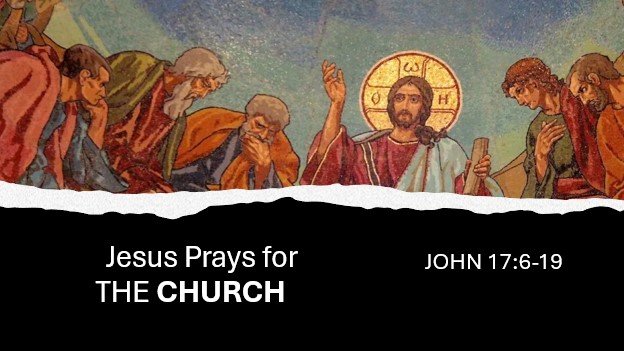
I realize that the entire Bible is the Word of God and that one of Christ’s names is “The Word”, describing the fact that he is the embodiment of God’s full revelation. But sometimes don’t you just wonder what Jesus thinks of you and how he prays for you? I do. In John 17, Jesus’ High Priestly Prayer is the answer to those questions. This Sunday we will see what Jesus prays for the Church as a whole and then next Sunday we will conclude Chapter 17 be seeing what Jesus prays for us individually.

What does Jesus pray for the Church? This prayer is offered just hours before Jesus would be arrested and face an unjust trial, followed by being cruelly tortured, then crucified. Jesus knows His time on earth with the disciples is drawing to a quick close and He is concerned about how they will continue in the mission of the Father without Him. In verses 6-19, Jesus beautifully articulates what He thinks of you (and you’re going to feel so good from knowing what He thinks), and what He asks the Father to do through His Church (and you’re going to be so encouraged by what He is asking us to do.) I hope you will join me this Sunday as we look at what Jesus prays for the church.


One Church Service – October 6th, 2024

While I love going to church every Sunday, I have to admit that I look forward to our One Church – One Service Sunday’s with a little more excitement. It is a blessing for me to see the entire congregation, together at the same service as we will this Sunday. This Sunday we will WORSHIP in song, we will PRAY, I will TEACH, we will celebrate COMMUNION and then after the service, stay for some FELLOWSHIP around light refreshments. These are the five activities of the early church in Acts 2, and we will practice all of them this Sunday . . . with our entire congregation.
Sunday I will preach from John 17:1-5 where Jesus begins His High Priestly Prayer by praying first for His relationship with the Father to be glorified. Think about that word “glory” for a minute or two. What do you think of when you think of something that has glory? The Olympics are an opportunity for athletes to reach for glory in their sport. In a month we will have an election where the winner will be given the glorious position of being President of the United States. If you have been to a wedding recently the bride is dressed in such a way to bring glory to her personhood and appearance. What is the glory of God? The beauty of creation reveals the glory of God. At the time of Jesus’ birth, the Angels spoke about the glory of the baby Jesus. As glorious as both of those are, they are not the ultimate glory of God. The ultimate glory of God comes through the events of the crucifixion of Jesus Christ. From a human perspective there is nothing glorious about crucifixion, yet that is where the glory of God is its greatest. Why? There is glory in the cross because it is only through the redemptive sacrifice of Christ that mankind can be given eternal life and a relationship with a holy God. In this prayer Jesus points out that the Father has “sent” Him for this purpose: to glorify the father through the redemption of mankind. And that purpose is passed onto the church today. As a church that seeks to know and fulfill the purpose of God, we must be reminded that our purpose is to share that glorious message with the world around us – that life, and life eternal are only found in Jesus Christ.
We are One Church – One Purpose.

September 22, 2024

Have you ever seen the movie or the play “The Music Man?” In that story a quiet and peaceful little town has a visit from a stranger who at first seems very friendly and nice, but brings something to the little town it had never had before: the game of pool. And with pool came gambling, and with gambling came that dreaded “T” word, trouble. The story is told as a musical and the signature line of the theme song goes like this,
“You got trouble, folks, right here in River City, trouble with a capital ‘T’ and that rhymes with ‘P’ and that stands for pool.”
The music man brought trouble to River City, and it was never the same. Our text this Sunday shows us that there is not only trouble in River City, there is trouble in this world. The passage context is the night before the crucifixion and that would bring a whole new level of trouble for the disciples. In the backdrop of that impending trouble, Jesus promises that trouble will be turned to joy. And we know that was true for the disciples. The passion of Christ was full of trouble, but just a few days later it all turned to incredible, indescribable joy because of the resurrection. As long as we live in this world we will have trouble, but that trouble is the catalyst that brings people to the cross of Jesus where that trouble can be turned into great joy.
Do you have trouble in your life? You are not alone. Join me this Sunday as we examine how Jesus brings peace over trouble.

September 15th, 2024

Out of sight – out of mind. Have you ever been guilty of that? I know I have. It is easy to stay focused on the things we experience with our senses of sight, touch, smell, sound and taste. The things beyond the natural senses are a little more difficult to focus on. I think that is what often happens with the ministry of the Holy Spirit. Because we can’t see the Holy Spirit, and He is the third person of the Trinity, we tend not to think about the Holy Spirit to the same level we do the Father and the Son.
In our text this week Jesus tells us the vital role of the Holy Spirit in the time following His death, resurrection and ascension . . . the time we now are living in. Jesus goes on to say that it is actually a good thing that He (Jesus) was leaving because His departure would be the catalyst to send the Holy Spirit from heaven. Jesus thought the work of the Holy Spirit was so important for us that He said His own death and departure was good because it would bring the benefit of the Holy Spirit to you and me. Unfortunately for most Christians, the Holy Spirit remains out of our minds because He is out of our sight. Join me this Sunday as we consider the dynamic and powerful work of the Holy Spirit in our world today.

September 8th, 2024

You may remember 25 years ago a book that was published titled “Everything I Really Need to Know I Learned in Kindergarten.” In that book, the author looks back over his life and discovers that as educated as he thinks he is, what he really needed to know for living life he learned in kindergarten. That got me thinking about my spiritual journey and the things I learned over the years of college and seminary. As great as those years of education have been, I believe that what I really need to know for living the spiritual life I learned when I was a child going to Sunday School. I would like to say I learned a lot of great facts and profound truths while I was in Sunday School, but I honestly can’t recall a single one. What I do remember about my days in Sunday School as a child are the people who taught me. This Sunday I want to share a testament of sorts about how God used my various teachers throughout my life to help me grow in my spiritual journey to be the person I am today.
From my personal experience in Sunday School,l I want to make two applications for all of us. 1) Teaching the next generation the eternal truths of scripture is one of the most rewarding things you can do as a Christian. We need teachers for our children’s classes, and I pray God will use my experience to stir some new teachers to help with this important ministry. 2) We all have the need to be influenced by other Christians to help us grow in Christ. At our church we do that through our community groups, and I will challenge you to join one of our Community Groups or Adult Discipleship Classes so you can grow in Christ through interaction with other believers. Join me this Sunday as we consider the importance of Christian education and discipleship in our church.

August 25th, 2024

Last Sunday I preached from Acts 2 on What is a Church? Scripture answered the question with, “The gathering of redeemed, followers of Jesus Christ!” This Sunday we will go back to Acts 2 to see What the Church Is Supposed To Do?
Last Sunday I preached from Act 2 on what is a church? Scripture answered the question with, “The gathering of redeemed, followers of Jesus Christ!” This Sunday we will go back to Acts 2 to see what the church is supposed to do?
Churches do any number of different things, with their own particular points of emphasis and even personalities. I’ve seen the “Cowboy Church” that sought to reach cowboys. Inner city churches tend to focus on the socio-economic needs of a disadvantaged aspect of society. There are churches that seek to appeal to a specific ethnic group. Just across the bridge is a Korean Baptist Church which we would assume is targeting people from a Korean background. Other churches place a strong emphasis on either Christian Education or missions. And then there is our church, located on an island, close to the beach with a population that is comprised of people from all over the eastern seaboard and from a wide variety of backgrounds. What’s a Church to Do? How do we know what is really important? How do we decide what we should do?
In Acts 2 we read about the very beginnings of the church, which provides for us first principles for the church. What the early church did and didn’t do becomes the foundation of what any church, in any culture and any time period should be doing. Sunday we will identify those fundamentals from Scripture. The amazing thing that God does for the local church is after they have made a commitment to the fundamental functions of the church, He gives each church flexibility in how we actually do church. That explains why there are so many different styles of churches. Therefore, each local church needs to wrestle with these fundamentals in light of the culture we live in, together with the people God has given to the church in that particular location to discern what they are to do. Join me this Sunday as we consider “What’s a Church to Do?” And more specifically, what is our Church supposed to do!

August 18, 2024

Did you know there are over 200 denominations in the United States? With each group having their own nuances of what a church is supposed to be it is no wonder people are confused about what a church is! This Sunday we are going to spend some time in the passage of scripture that describes for us the very origins of the church, Acts 2. In looking at the “birthday” of the church we will see the biblical foundation that defines a church and from that hopefully answer the question, What is the church?. The answer is not found in a physical structure, the dogma of a group or a denominational name. Rather, the answer is found in a singular person, Jesus Christ, and the people that He has called out of the world to follow him. Join me this Sunday as we consider the origins of the church.

August 11

Because of my position in the church, I get introduced in various ways.
“Meet Rev. Matthews – he’s the pastor of Kure Beach First Baptist Church.”
“This is Pastor Andrew Matthews and he’s the pastor of Kure Beach First Baptist Church.”
“This is Pastor Andrew – he’s the pastor where I go to church.”
“Meet the preacher from my church – Pastor Andrew.”
“This is Andrew, he’s my pastor.”
BUT my preferred way to be introduced is . . .
“I’d like you to meet my friend Andrew.”

There is just something about friendship and the expression of that friendship in front of other people that conveys the nature of the relationship. We are more than just associates or acquaintances, we are friends by choice.

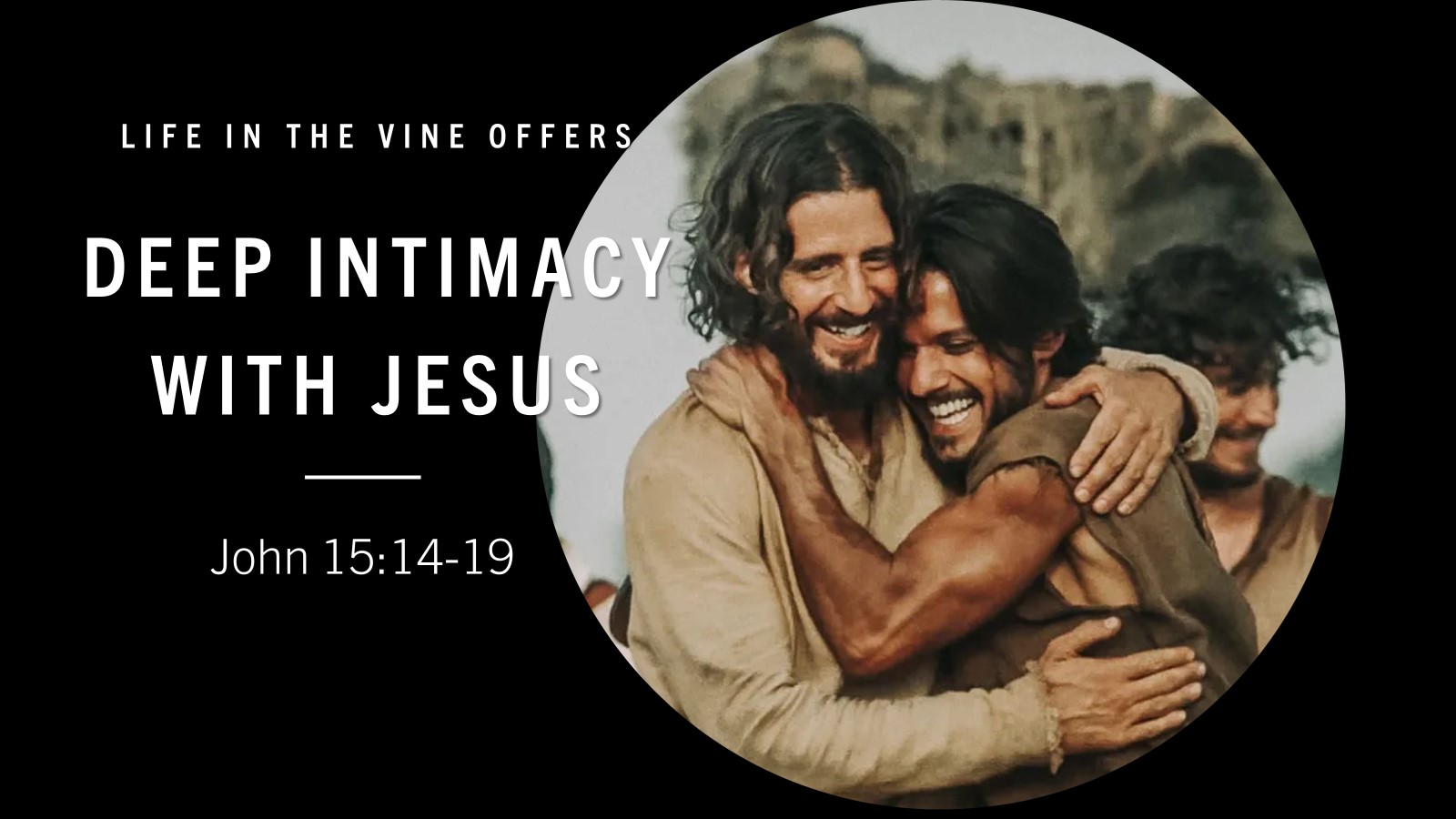
Jesus could call us a lot of different things: His creation, sinners, servants, minions, followers, or disciples. But in John 15, Jesus calls us friends. He does this because he wants to convey the intimate nature of our relationship with him. The word friend is defined this way: “a person whom one knows and with whom one has a bond of mutual affection.” In friendship there is a mutual affection for each other. That Jesus calls us friends tells me Jesus is drawn to you, is interested in you, cares deeply about you, and is willing to be transparent with you. Are you willing to do the same? That is what makes for a good friendship – when both people are assuming that posture toward the other person. Does it feel like Jesus is your friend? Could it be you are not understanding Jesus’ relationship offer to you? Or maybe you are assuming an incorrect posture toward Jesus that is keeping the friendship from blossoming? Join me this Sunday as we look at how life in the vine offers a deep intimacy with Christ!

August 4th, 2024

As Americans the “pursuit of happiness” is something that is part of our cultural identity. We live in the greatest country in the world, with the greatest opportunities for success and happiness, and yet so many Americans are anything but happy. It almost seems as though the more our society gains materially the less happy we are. When our founding fathers used that term, “the pursuit of happiness”, I don’t think they believed happiness came from material things. No, they believed happiness was rooted in our individual autonomy and freedoms, given to us by God. And they were correct in that belief.
In our text this Sunday, as we continue through John 15, we will see the source of true and lasting joy is in direct proportion to our reliance upon Christ as our source for all we need. That need begins with Christ’s unique ability to deal with our sin problem through His sacrifice on the Cross. True and lasting joy can only be known through the new life we can have in Christ. But even Christians can experience unhappiness if we are not fully relying on Jesus as the source for all things. When Christians believe they need certain things from this material world in order to know joy or feel happy they instead will find disappointment that results in shame, sadness and depression. Join me this Sunday as we pursue unparalleled joy from our life in the vine.

June 30th, 2024

This Sunday we will celebrate Communion – The Lord’s Table. Growing up my mother was insistent on proper table manners from her two very active boys; I’ll share a bit more about that on Sunday. My mother did this because she believed certain manners at the dinner table made for a better dining experience for everyone. Every culture has its own unique table manners, and those manners reveal what is important to those people. In 1 Corinthians 11 the Apostle Paul shares some table manners for coming to the Lord’s Table. How should we prepare ourselves? What is the purpose of the meal? How do we best participate in the meal? These table manners will make the Lord’s Table a better experience for everyone.

This Sunday we will also celebrate Believer’s Baptism with Ed Kohl’s baptism in the ocean after our Beach Church service. Join us as Ed publicly shares his faith in Christ through his obedience in baptism.