
Memorial Day Message Recap

Greater Love Has No One Than This: Living Sacrificially Like Christ

Memorial Day offers us more than just a long weekend—it provides a profound opportunity to reflect on the ultimate sacrifice and what it means to live with sacrificial love. As we honor those who gave their lives for our freedom, we’re reminded of an even greater sacrifice that changed everything.

What Does It Mean That God Is Love?

The apostle John makes three powerful declarations about God’s nature throughout his writings. He tells us that God is light (righteous and true), God is spirit (not confined by the physical), and most importantly for our discussion today, God is love. This isn’t simply saying that God shows love or has love—it means He IS love itself.

Theologically, this means that any love that exists anywhere in the universe is sourced from God. When we see sacrificial love displayed by soldiers who die for their country, or by anyone who puts others before themselves, we’re witnessing a reflection of God’s very nature.

Why Did Jesus Die for Us?

What motivated Jesus to make the ultimate sacrifice? It wasn’t because we were worthy—Scripture is clear that we are unworthy in our sinfulness. It wasn’t because God had to—He doesn’t need anything from us. The motivation was simply love.

“‘Have this mind among yourselves, which is yours in Christ Jesus, who, though he was in the form of God, did not count equality with God a thing to be grasped, but emptied himself by taking the form of a servant, being born in the likeness of men. And being found in human form, he humbled himself by becoming obedient to the point of death, even death on a cross.'” – Philippians 2:5-8 (ESV)

Jesus left His place of comfort in heaven, assumed the role of humanity, and willingly paid the ultimate cost with no expectation of return from us. His death wasn’t just to be a good example or start a religious movement—it was for our redemption, restoring our relationship with the Father and giving us value.

How Should We Honor Those Who Died for Our Freedom?

“‘Pay to all what is owed to them: taxes to whom taxes are owed, revenue to whom revenue is owed, respect to whom respect is owed, honor to whom honor is owed.'” – Romans 13:7 (ESV)

Like Christ, the soldiers who died for our nation were motivated by love—love for family and country. They too left places of comfort, assumed roles they may not have chosen, willingly paid a cost, and had no expectations of adequate repayment for their sacrifice.

We honor them not just by remembering their names or flying flags, but by understanding that their sacrifice reflects the same divine characteristic we see in Christ—sacrificial love that puts others before self.

What Does It Mean to Live Sacrificially?

In our individualistic society, it’s easy to become focused on ourselves rather than others. We often ask, “What’s in it for me?” But Christ calls us to a different standard. He commands us to love one another as He has loved us—sacrificially.

“‘This is my commandment, that you love one another as I have loved you.'” – John 15:12 (ESV)

This goes beyond the golden rule of treating others as we want to be treated. Christ calls us to love others with the same sacrificial love He showed us, regardless of how we’ve been treated.

How Can We Love Others the Way Christ Loved Us?

The key to loving others sacrificially is understanding the depth of Christ’s love for us. When we truly grasp that Christ died for us while we were still sinners—while we were in opposition to God—we begin to understand the magnitude of His love.

“‘But God shows his love for us in that while we were still sinners, Christ died for us.'” – Romans 5:8 (ESV)

This understanding transforms us from orphans fending for ourselves to adopted children of God. “‘But to all who did receive him, who believed in his name, he gave the right to become children of God.'” – John 1:12 (ESV)

What Does Sacrificial Living Look Like Practically?

Like Christ, we can live sacrificially by:

Leaving Our Place of Comfort: Being willing to say there’s a higher purpose to life than just our comfort, wealth accumulation, or gaining admiration from others.

Assuming a Role: Becoming ambassadors of God’s love to others. Just as a political ambassador represents one person—the president—we represent Christ to the world.

Willingly Paying the Cost: God may call us to give up things we value, change career paths, or make sacrifices that open opportunities to serve Him in different ways.

Having No Expectations of Return: True Christlike love doesn’t expect something back. We serve because of love, not for what we might receive.

Where Can We Serve Sacrificially?

In Our Country: Through small acts of kindness, volunteering in communities, and advocating for justice and equality.

In Our Church: Serving in ministries, volunteering in areas of need, and working together with other believers for spiritual growth.

In Our Families: The most important form of “government” isn’t in Washington, D.C.—it’s in our homes. If we don’t learn to serve within our family units, we can’t expect to serve effectively anywhere else.

With Our Spouse: Instead of entering marriage expecting the other person to meet all our needs, we should focus on discovering ways to serve them sacrificially.

Life Application

This Memorial Day weekend, the greatest tribute you can give to those who died for our freedom—and the greatest way to honor Christ’s sacrifice—is to commit to living sacrificially in service to others. This means actively looking for ways to put others’ needs before your own, whether in your family, church, community, or nation.

Consider these questions as you reflect on this message:

  • In what specific ways can you leave your “place of comfort” this week to serve someone else?
  • How can you better serve your family members without expecting anything in return?
  • What opportunities exist in your church or community where you could volunteer your time and talents?
  • How does understanding the depth of Christ’s love for you motivate you to love others more sacrificially?

The call to sacrificial love isn’t just a nice idea—it’s the very essence of what it means to follow Christ and honor those who have given their lives for our freedom. When we live this way, we reflect God’s nature and provide the greatest possible tribute to both Christ’s sacrifice and the sacrifice of our fallen heroes.

Memorial Day, May 24th, 2026

This weekend is Memorial Day Weekend, and we will recognize this important holiday during our Sunday services. Each service will start with a moment of silence and prayer for the families of those who have lost loved ones in the defense of our freedom. Then I will share a message from John 15:13 – No Greater Love. There is no greater love than for a man to lay down his life for another. I hope you will include one of our services as part of your Memorial Day Weekend.

What would cause one person to be willing to sacrifice their lives for another person? It is the ultimate sacrifice. Our text this Sunday points us toward the answer: No Greater Love because Love is the only motivation for that kind of sacrifice. We are created in the image of God and on Sunday we will see we are most like our creator when we love sacrificially other people. Jesus is the ultimate example of that love with his sacrificial death on the cross for our atonement, so that we do not have to live in eternal death, separated from God. The Gospel of Jesus Christ is that, motivated by love, Jesus sacrificially died in our place so we would not have to face the wrath of God for our sins.

Jesus’ death for us is primarily a redemptive act because through his death he accomplished something no one could ever accomplish on their own: the forgiveness of our sins. The death of Jesus is also an example of what it means to be fully human in that we are to live our lives in service to others which often includes sacrifice. Memorial Day reminds us of the thousands of Americans that have done that very thing for the liberty and freedom we enjoy today. Motivated by love of family and country, they died for the freedom of others. While we may not be called to sacrifice our life for others, part of the human experience is to love others sacrificially for their blessing. Currently our society is pushing individualism, causing any of us to weigh the question,  “what will be in it for me if I make this sacrifice?” As Christians, God calls us to put the needs of others before our own by willingly making sacrifices for those who can never repay the sacrifice. The Gospel, and Memorial Day reveal the love of God as fulfilled through His image bearers. There is no greater love than to make a sacrifice for others.

From the Briefing – Dr. Albert Mohler

The Brave Boy in the Pear Tree: How a 12-Year-Old Hero in Ukraine Fought Back Against a Russian Attack

And in this case, I want to talk about a boy in Ukraine. He was at the time this happened just weeks ago, 12 years old. I’m not going to mention his name. I’m simply going to say that on one day, just a matter of a month ago, so we’re not talking about something in the distant past, we’re talking about a 12-year-old boy in Ukraine last month. At that time, he was up in a pear tree, sounds like a parable, but that’s where he was. He was up in a pear tree. He was helping a neighbor by cutting off a damaged branch. So you have a 12-year-old helping a neighbor, he’s up on a tree, able to pair back this particular branch in a pear tree. And then he heard the buzz of a drone. And reporters, Constantine Kudov and Steve Hendricks for the Washington Post tell us the story. He heard the buzz of a drone. “That sound often means death in Ukraine and not just for soldiers on the front lines. Increasingly, civilians are tracked, chased, and attacked by small commercially available drones equipped with cameras rigged with explosives and steered by fingers on joysticks a dozen miles away.” So now you’re talking about a 12-year-old boy up in a pear tree helping out a neighbor when he hears a drone.

Okay, here’s the interesting thing. He realizes the drone is passing under him. Russia now darkly refers to the hunting down civilians as a human safari. Just think about how dark that is. It’s a killing, an intentional killing of civilians in order to spread terror. We are told, “In recent months, it has evolved with new technology and spread to border areas around the country.” This 12-year-old boy knew that this warfare was ongoing and one of the ways it was known is because of the filaments that were the connection miles and miles away of those running the drones and the drone’s lethal attack systems, the drone was trailed by a very thin line and that line was what was controlling the deadly drone.

And so the boy knew that and there had been a drone attack days and weeks before in which the boy and his father had with a neighbor, talking with a soldier, come to understand how the line worked in this control. The boy up in the pear tree, again, 12 years old, he said, “It saw the children and started gaining altitude.” That’s children in the yard, including his own siblings, “That’s when I realized something was about to happen.” The Post then reports, “What the boy did next, something he had rehearsed, something few civilians in Ukraine had been taught might have saved the lives of those children, his mother changing a diaper inside or other neighbors on the block.” “His story [I’m reading here from The Post] and the fact that a 12-year-old in a pear tree knows how to fight back against a Russian drone illustrates how deeply a tactic that the United Nations calls a war crime has dissolved the line between soldier and civilian in the fifth year of Russia’s war.” These drone attacks against civilians, against families, against children and others demonstrate the extremity of this war, and frankly, the extent to which Russia is willing to target civilians in Ukraine. In this case, we’re talking about children and mother changing a diaper, et cetera.

Russia had the innovation of equipping drones of fiber optic filament is defined as “a hair thin tether that unspools in flight like a spiderweb for 12 miles” and they’re using payloads that are very deadly and in order to overcome Ukraine’s efforts at jamming the controls, they’re using these filaments in order to maintain control to deadly effect. This boy and his father had noticed these “glinting gossamer threads” in their neighborhood and they were trying to figure out what to do about them. They came across a soldier and the soldier who was an explosive specialist explained “how the fiber optic material like a fishing line was almost impossible to pull apart without slicing the skin. Then he demonstrated three techniques the soldiers had found to break it. A combination of loops and pinches best to count to 15 after a drone passes before trying it. This specialist said, so you’re out of the drone’s view and don’t become the target.” 

Okay, so the boy and his father heard this. The boy received it with what we are told was curiosity. The drones kept coming and on this day the boy is up in a pear tree and the drone passes by underneath and it passes by with obvious lethal intent. Listen to what happened. “As the drone moved towards his family, the 12-year-old boy dropped to the ground. He ran 20 yards and got his fingers around a hairlike umbilical running all the way to Russia. He made a loop, pulled it slightly and remembered the soldier’s instruction, count to 15. He said, ‘I didn’t have time so I counted to 10 and I broke it.’”

The Post then reports, “The line snapped. The drone abruptly veered upward, banked away from the children and the houses and spiraled into a section of wild ground next to the neighborhood.” The boy said, “I waited for an explosion, but there was nothing. It turned out that crashing into the swamp meant that basically the swamp just absorbed the drone and its deadly effect.” The very weapon specialist who had explained the technology to the boy, including how to break the line sometime back, he was one of the first persons to respond to the boy’s action asking the question, “How can a civilian person, especially a child, do something like that?”

He went on to say not every soldier would have been able to react in a split second like that. This is one of those stories of heroism in which we are reminded that God created us as moral creatures. He put us in a moral universe. He put us in a universe in which we right now, even as I speak, are drawing attention to the heroism of a 12-year-old boy who without really thinking much about it, armed with knowledge he’d received in a conversation with his father, jumped out of the tree to save his brothers and sisters, his mother and the baby and others simply by grabbing the line. He said he didn’t have time to count to 15, so he counted to 10 and he broke it. And in all likelihood, as the Washington Post makes clear, he saved their lives.

I’m not mentioning the boy’s name. It is mentioned at least a name is provided in the news sources, but it is also said that the Russians are now determined to kill him and his family. So the Ukrainian authorities have moved them many miles away. I just find this one of the developments, one of the things that could pass under our radar, that should be very much on our moral screen as Christians. We need to be the kind of people, by the way, who would produce 12 year olds to do something like this in a second.

May 17th, 2026

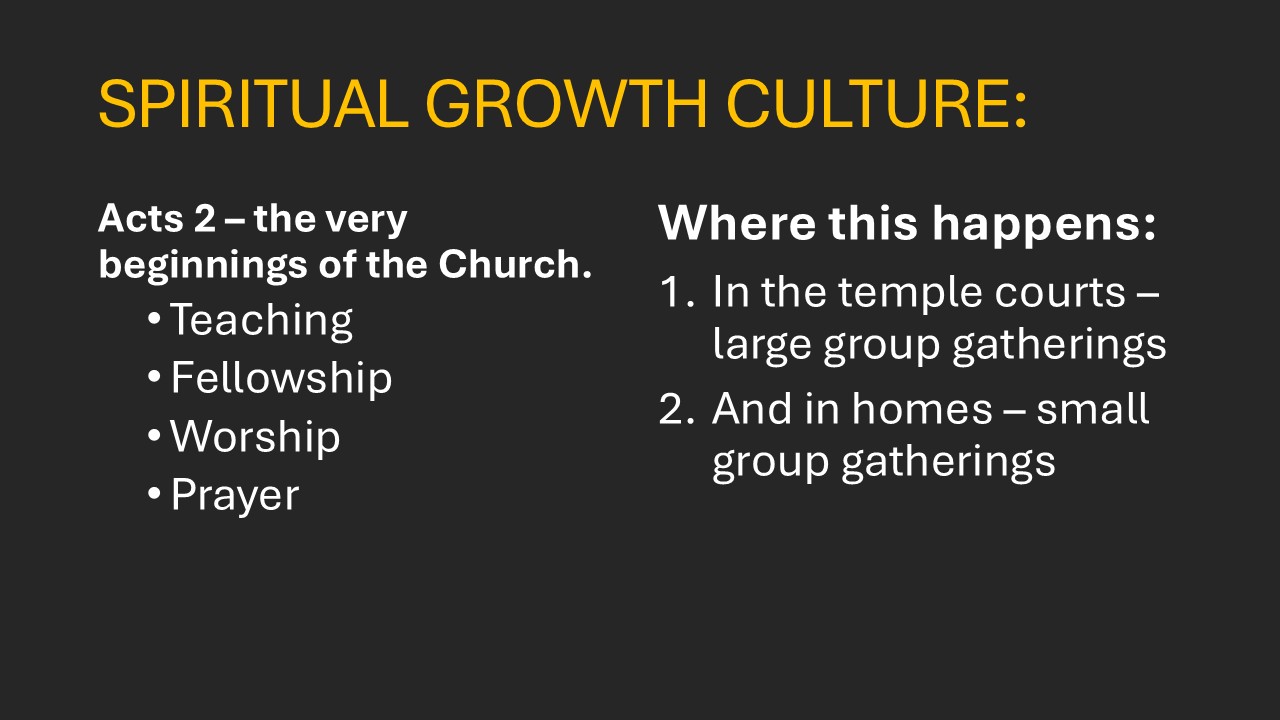
This week we will look at the first “sermon” which resulted in the beginnings of the church. Recorded in Acts 2 after Peter shared the truth of the Gospel. Peter spoke boldly about exactly what happened the day Jesus was crucified. He spoke directly to the point of who Jesus was and how He wound up on the cross. He said, “Jesus, the Son of God, whom you crucified and killed by the hands of lawless men”. It is recorded in the text the people who heard were “pierced to the heart” with the truth Peter shared. That day 3,000 people joined the group of believers. WOW, 3,000 asked, “Brothers what shall we do”? This is a great testimony of the resurrection of Christ since those Peter was speaking to would have seen or heard of the crucifixion and would have also seen or heard of Jesus’ appearances after being certified as dead and buried in the tomb.


So, what was so impactful about the words of Peter? What caused 3,000 people to search for a way to be cleared of what they knew they had done? How did this seemingly impossible task of coordinating any type of movement with 3,000 people from different homelands in the known world ever become what we know as the church today?


The church is needed as much today as it was in Acts 2. What makes a church impactful today in our communities? We know it isn’t our programs or our building. The original 3,000 had none of these. Furthermore, what does it mean to be “part of the church”? I hope you will join us as we look at answering these questions through the lens of the day of Pentecost as recorded in Acts 2.

Mother’s Day May 10th, 2026

Sunday is Mother’s Day and we will celebrate the mothers in our lives. For many of us motherhood has a positive connotation: you have a good mother or being a mother has been a major source of blessing for you. I also realize Mother’s Day does not have positive feelings for everyone attending our services on Sunday, and for that I am sorry. Mothers are given to us from God to be a source of blessing and the backbone of a healthy society. Whether motherhood evokes positive or negative feelings, society needs to recognize the value mothers are intended to have for all of us. 

Motherhood and womanhood in general have always been under some kind of attack, and our current times are not different. In the extreme feminist movement motherhood is viewed as an impediment for a woman in achieving her greatest success. The recent confusion of gender has been most acutely directed toward women. Biological men assuming the identity of a woman is a horrible affront to the importance of biological women in our society. The ancient text of Proverbs provides a counter cultural depiction of women and in particular, mothers.

The teaching and training of children is the critical function of the family unit for the propagation of a healthy society. History has shown us governments make for bad parents and don’t even come close to replicating the effectiveness of a husband and wife – a father and mother raising children together. In our text on Sunday, we will see the needed partnership of a father and mother sharing roles and responsibilities of shaping the next generation. Because it is Mother’s Day, we will emphasize the importance of mothers to care for and influence their children in a way that reflects God’s design for humans. Not only is God honored when we acknowledge the value of our mothers, humankind will prosper because mothers are the backbone to a healthy society. 

May 3, 2026

If there is a common affliction in our culture, it is the affliction of business. We all like to be busy and moments of solitude can be uncomfortable to the point we try to avoid them at all costs. There is constant activity in our brain and what we don’t deal with during our waking hours is often transferred to our subconsciousness during sleep. 

In our current series we are moving through the Lord’s Prayer and while it doesn’t explicitly tell us to slow down and listen to God, the context of Luke’s version is Jesus off in a quiet place praying when the disciples asked him to teach them to pray. The example of Jesus in prayer is to be quiet, slow down and listen to the father. This Sunday we will see that Christian meditation as an effective element of prayer. Christian meditation is vastly different from other forms of meditation as seen in the religion of yoga where meditation is the emptying of the mind. Christian meditation is replacing our troubling brain activity with the knowledge of God as revealed in His word. Christian meditation requires being informed with God’s Word first and as we mull over what we read, we can process our circumstances in a spiritually healthy way. Christian meditation requires some level of solitude to block out the noise of the world and to hear the voice of God. There is a place for praying as we move throughout the day, but there is a need to hit the pause button, slow down so we can listen to God in prayer. Prayer is a two-way conversation between us and God. Unfortunately, many times we dominate the conversation, not giving God a chance to speak and be heard. When you pray, slow down and listen to God.

April 26th, 2026

A primary teaching in the Lord’s Prayer is that prayer is us connecting and communing with God. Its pretty amazing when you stop to think about it . . . we get to talk with and share life with the creator God of the Universe. The Old Testament, beginning with the fall of man in Genesis 3, reveals God’s plan of how sinful humans can have relationship with a Holy God. Humans could not come to God on our own, and because of His Holiness, God would not come to man as He did before sin entered humanity. During the life of Moses God provided a temporary way for this to happen through the temple. The temple is an earthly representation of what heaven is like, most notably as the place where God dwells. In a very tangible way, the temple was a place on earth where heavenly things were done, which centered around communion with the God of heaven.

In the Lord’s Prayer when Jesus said, “Your Kingdom come, Your will be done, on earth as it is in heaven” we hear language that draws our attention to what was temporarily accomplished in the Old Testament Temple: Sinful humans could have communion with the Holy God of the Universe. To pray for God’s will to be on earth as it is in heaven is to fully engage in communion with God so that His kingdom will be seen here on earth. Ultimately, the Kingdom of God will be fulfilled in the age to come. However, scripture is clear that we can experience elements of that Kingdom while we are here on earth. So, When You Pray, Seek Heaven on Earth. 


Praying Over the News

During this church wide series on prayer, I have come to realize that most of us struggle with how to process and respond to troubling world events. Watching the news only makes the anxiety level grow. Have you ever thought about praying over the news? Let me introduce you to a great tool that helps us look at the news from a Biblical, Godly worldview, then to pray over those events for God’s glory through them. It’s called the Pour Over. It’s free, it comes out 3 times a week and you can either read it or listen to the podcast. There are versions to do with kids as well as other resources. If the news is troubling for you, give the Pour Over a try . . .


April 19th, 2026

Announcement – We will never send you a request through a text message asking you to donate to the church. This week people from our church have received text messages that look like they are from Pastor Andrew, asking for gift cards. We will never do that.

Sunday, we continue our journey through the Lord’s Prayer in Matthew 6 and Luke 11. Our Community Groups are doing studies in conjunction with my message from “The Prayer Course”. You can watch those videos through our Right Now Media account – you can access that through the button in our church newsletter / bulletin.
This week we will look at “Give us each day our daily bread” – Petition. In our community groups this week we learned that our prayers need to be relational not transactional. Prayer primarily needs to be coming to God in relationship for the purpose of strengthening that relationship. But, just as in a parent child relationship, our relationship with the Father includes asking him to do things for us. We call that “petition.” It is clear from the Lord’s prayer that God wants us to come to him with any and all needs we have. 

After the Lord’s Prayer in Luke 11:5-13 Jesus tells a parable about an impertinent man who shamelessly wakes his neighbor up in the middle of the night to ask for some bread. He doesn’t just ask once, he asks repeatedly until he gets what he needs. On Sunday we will look at that parable as an illustration of how he should think of coming to God with our petitions. Included in Jesus teaching with the parable is the famous admonition for us to ask, seek and knock as part of an effective prayer life. The tense of those verbs is present tense which makes them a continuous practice. Petitioning is something we are to do continuously as part of a healthy prayer life. Join me this Sunday as we continue through the Lord’s Prayer.

April 12, 2026

This Sunday we start a 4-week church wide emphasis on prayer based on the Lord’s Prayer as found in Matthew 6:5-13. We are breaking the Lord’s Prayer into eight small sections where I will preach on one section on Sunday, followed by our Community Group Studies that week. We will repeat that pattern for 4 weeks. In our Community Groups we will use the Video based material “The Prayer Course” on Right Now Media. If you don’t have Right Now Media, you create an account for free through a link in our church newsletter every week. If you are not in a Community Group this is a good time to join one, even if it’s just for these 4 weeks.
Jesus begins his teaching in the Lord’s Prayer with the phrase, “When you pray . . .” Jesus assumes all people will pray at some time and in some way. But do they pray as God intended for them to pray? Join us for this important series on prayer as we discover what it means to pray the way God intended us to pray.
Easter Sunday – April 5th, 2026

What is the most significant event that has happened during your lifetime? You could look at it from just your personal experience but maybe try to think of something that has happened on a bigger scale that has affected many people, including you. For me that would be the events of 911 on September 11th, 2001. I knew the moment I saw the second plane hit the World Trade Center our world would never be the same; and I was correct.
Throughout the course of human history there have been events, for the better or for the worse, that have changed the course of humanity. Time is the only way to know if the changes we are experiencing right now will be for the good or for the worse. However, there is one event that is tied to one person that stands out as the pivotal moment of all history. Easter and the resurrection of Jesus Christ is that event. The life of Jesus stands above every other life ever lived as the most important life. People the world over see this as the year 2026, which really means, “This is the year, In the Year of Our Lord, 2026.” The resurrection of Jesus is the most important and amazing event of all history: A person died and came back to life! If God can do that, God can do anything. Easter Changes Everything!
Some of the major events of history will not have a direct effect on our lives at this time. But the resurrection of Jesus still affects people’s lives today. We may think our lives are inconsequential in the grand scheme of things, but that is not how God sees it. Through the resurrection of Jesus God offers us that same amazing gift of resurrection: life after death. That is an event that affects our lives here and now as well as in the future. Easter does change everything. Join me this Sunday as we celebrate the resurrection of Jesus and how that one event changes everything.