
May 4th, 2025

This Sunday I will bring to completion preaching through the entire gospel of John. We have been at this off and on for the last two years. In John 21 we see another visit the resurrected Jesus has with the disciples and one disciple in particular, Peter.
Jesus makes it a point to reconnect with Peter after the resurrection to make a fresh start in their relationship. Prior to John 21, Jesus and Peter had never discussed the events during Jesus’ trial when Peter denied Christ three times. There are two things that stand out to me from this passage: 1) Peter wanted to connect with Jesus personally – He jumped out of a perfectly good boat into the water to get to the shore and to Jesus faster. 2 ) The conversation was hard for Peter – remembering our failures is never a pleasant experience. Can you relate to Peter? I know I can.
How Jesus treated Peter that day reveals how Jesus will deal with us when we come to him with our failures, looking for a fresh start. Jesus lovingly leads Peter to recognize the root of his failure and what he needed to do to correct that. Jesus conveyed to Peter that in spite of his shortcomings there was a place for Peter in the work of the kingdom. I often say, “The success of the Christian life is a series of new beginnings.” Jesus gave Peter a fresh start / a new beginning and Peter went on to lead the early church. It is often the people whose lives have received the deepest penetration of God’s grace who will be used to do a great thing for God. Do you need a fresh start? Will you make a new beginning? Join me this Sunday as we conclude John’s Gospel and Make a Fresh Start.

April 27th, 2025

When I was a boy growing up it was considered to almost be an anathema to question anything with regard to the Bible, the Church and God. The thought was, “How dare anyone question . . .?”. Doubting God or the Bible was considered to be a lack of genuine faith. I hope we have all moved beyond those narrow minded positions and can understand the role a questioning mind needs to play in our spiritual development.
Do you struggle with doubt at times? You actually are in good company. As the account of Christ’s resurrection continues to unfold in John’s Gospel, we see 10 of the disciples gathered in a locked room the night of that first Easter in fear for their lives. They questioned and doubted the validity of claims people made of seeing a risen Christ. Christ appeared to them and they believed. A week later, Thomas, who was the only one of the disciples absent the previous week, joined them. Thomas has a reputation of being a lead doubter (doubting Thomas!) doubted the reports from his closest friends of the resurrection, yet passionately believed when Christ appeared to him.
While Jesus does gently chastise all the disciples for a lack of faith to accept the accounts of the resurrection, I think Jesus understands humans will doubt. What we know happened for all those who doubted is Jesus led them to grow through that doubt to a fuller life in Him. Jesus understands our weaknesses and offers to help us grow through them. This Sunday we will see how Jesus led them, and can lead us, From Doubt to Life! Join me for this encouraging message for anyone that has ever dealt with religious doubt.

April 20th, 2025

Sunday is Coming! This Sunday we join millions of Christians around the globe to celebrate the resurrection of Jesus Christ. There is no question that the resurrection of Christ is the pivotal event of all human history and I invite you to fully embrace Easter this weekend.

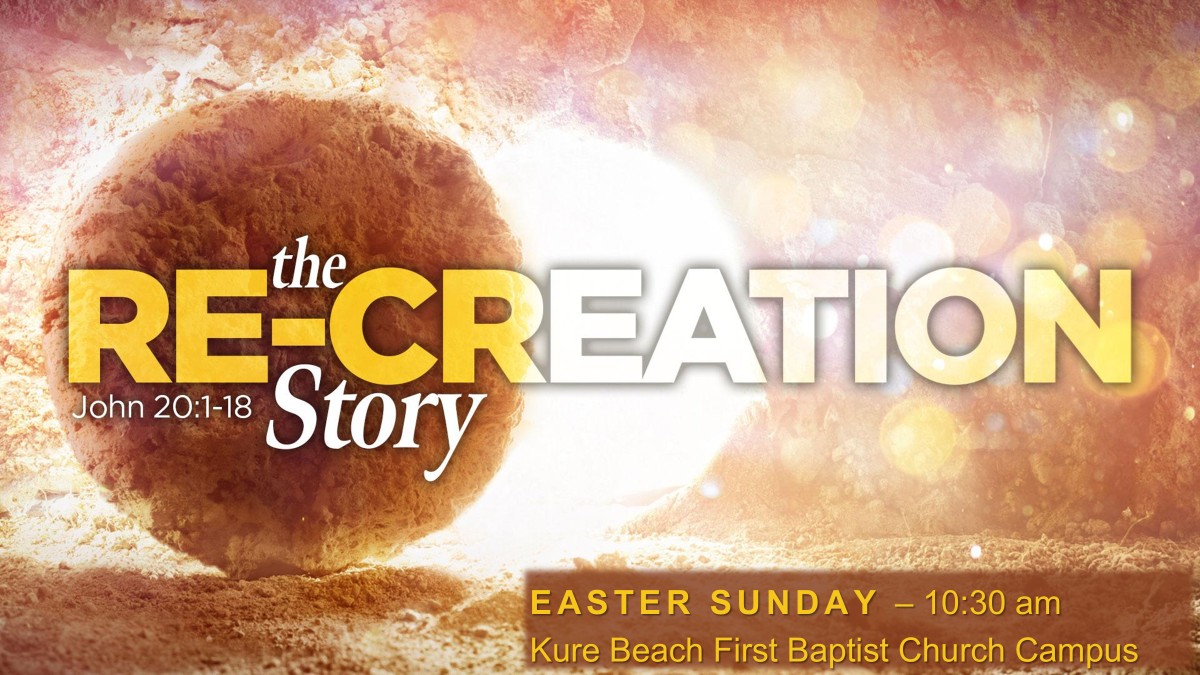
This Sunday we will see from John’s account of the resurrection the personal effect of the resurrection on the people John records for us. The resurrection is not just a historical event, or an annual celebration of the church. The resurrection needs to be personally applied individually to each of us. John’s Gospel begins by echoing the words of Genesis 1, “In the beginning . . .” to set the tone for the rest of the Gospel, that Jesus came to redeem his creation. Easter is the Re-Creation of humankind through the redemptive work of Jesus, and God wants to do that recreation in each of us. Join me this Sunday for The Re-Creation Story.

Join us for the sunrise service at the KB Pavilion – 6:15 am. I’ll be speaking from 1 Corinthians 15 on the witness of the resurrection.

April 13th, 2025

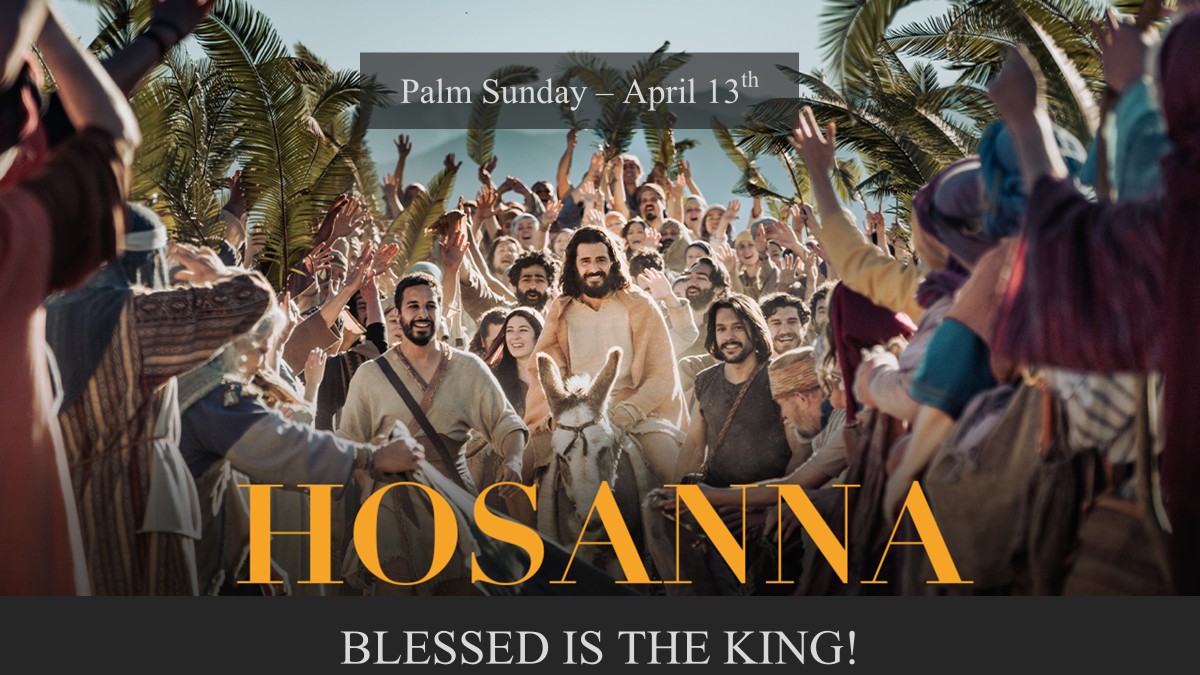
The King We Long For

Sunday is Palm Sunday, the start of Holy Week! Our early church fathers established the Christian calendar as a way for the church to remember and personally engage in the major events of the gospel on at least a yearly basis. The gospel is embodied in the events of Holy Week, so as gospel people, I invite you to join us for these services:

  • Maunday Thursday / 6:30 pm: Join us as we remember the events of the Last Supper Jesus had with his disciples. We will celebrate communion and reflect on the command to love one another. This will be a brief, but meaningful service.
  • Good Friday / 6:30 pm: This is a Tenebrae service of gradual darkness. Through the dramatic reading of various passages we will trace the account of Jesus’ crucifixion. As we move through those events the room will be gradually darkened until we reach the death of Jesus in complete darkness. This will also be a brief, but meaningful service.
  • Sunrise Service / 6:15 am at the Kure Beach Ocean Front Park and Pavilion. If you’ve been before, you know. If you haven’t been before, don’t miss it. 
  • Easter Sunday Service / 10:30 am at the church campus. Join as we look at John’s account of the resurrection from John 20 – The Re-Creation Story!

And it all starts this Sunday with Palm Sunday, the week before the resurrection when Jesus rode a donkey into Jerusalem as the true King. I say the true king because all through the history of humanity, mankind has longed for a king, a ruler, a leader to protect, care for, and provide for our needs. The history of Israel draws us to the conclusion that in spite of some good kings, all kings could never adequately meet the needs of the people. This Sunday we will see how the echoes of Old Testament passages illustrate the failure of all earthly kings and rulers, while presenting Jesus as the true king that fully satisfies our longings. Join me this Sunday as we celebrate the one true king!

April 4, 2025

This week we are wrapping up the sermon series, “Passion – It Wasn’t the Nails.” We conclude John 19 with the account of Jesus’ death and burial. If during Holy Week you only come to the two Sundays of that week, Palm Sunday and Easter Sunday, the miraculous events of Easter are felt and experienced to a lesser degree. If you miss Good Friday, you are not impacted with the fact that Jesus actually died. We often pick the parts of Jesus we like: Baby Jesus, Miracle worker Jesus, Insightful teacher Jesus, peace loving Jesus . . . you fill in the blank. The part of Jesus we might feel uncomfortable with is the death of Jesus. If we don’t see, feel and embrace the fact that Jesus truly died for us, our Gospel is just a self-help philosophy. God does not want to help you be a better person! God wants to transform you, which can only happen through a miraculous life that died and came back to life again for you.
This Sunday we will consider the passion of Christ to the point of death. I believe John is very intentional to show beyond a shadow of a doubt that Jesus died, and in His death paid the full price for our redemption. Bookends on a bookshelf groups books of a similar topic, theme or genre together. You often hear me talk about “bookends” that are in the biblical writing: something is mentioned, some content follows, then the first thing is mentioned again, thus creating bookends that reveal a common theme for all that is between the bookends. The man, Nicodemus, is only mentioned twice in the entire New Testament; John 3 and 19. I believe the person of Nicodemus creates bookends that reveal the main theme of the Gospel of John; that Jesus died to save us from our sins. In order to believe Jesus can save us from our sins, we must know and believe that he died as our substitute on the cross.
My prayer is that God will use this series to help prepare you for a meaningful Easter Week and resurrection Celebration on Easter Sunday. Join me this Sunday for a deeper look into the death of Jesus who through His death paid our debt and purchased our redemption.

March 30, 2025

We are winding down our current series “Passion: It Wasn’t the Nails” with messages this week and then next. On April 13th I will preach on a Palm Sunday text to help set things up for our Holy Week services. This Sunday we will look at what John records about the actual crucifixion of Jesus. There has been a lot recorded about the brutality of Roman crucifixion. Many of you have watched Mel Gibson’s movie, The Passion of the Christ, where that history is described in gut wrenching visual reality. While that sells movies, because we tend to gravitate toward the sensational, that is not in the record of the Gospels.
Sometimes an author can say more by what they don’t say than by what they actually do say, and John is definitely doing that in chapter 19. John uses one word to describe the method of Jesus execution: Crucifixion! People living during the writing of John’s Gospel would have a far better understanding of crucifixion than most of us would because it was still very much a part of the culture. They likely would have seen a crucifixion in person. However, I believe John desires to make a point with what he doesn’t say about it. The focus of Christ’s passion was not on the cruelty of his execution; many people were executed in a similar way during the Roman Empire. The focus is on the mission of Christ being fulfilled. Yes, fulfilled through His death, but even more through the resurrection. The gospel writers are careful to not leave Jesus on the cross, but to see it as part of what was needed for Jesus to defeat death, Satan and sin through the resurrection. Join me this Sunday as we consider Christ’s passion to fulfill scripture.

March 23rd, 2025

C.S. Lewis has famously said of Jesus, “Either this man was, and is, the Son of God, or else a madman or something worse.” There is no middle ground when it comes to who Jesus is. In this week’s text, the trial of Jesus in the courtyard of Pilate continues, and we see Pilate struggling through this very question.
The identity of Jesus is unique in the universe and difficult to grasp at times. Jesus is fully God and fully man, all at the same time. The theological term for it is The Hypostatic Union. More heresies of the church have arisen out of trying to explain the two natures of Jesus. One extreme heresy would deny that Jesus ever had a material, physical body. Another one says that Jesus only temporarily occupied His physical body. And yet others will deny the divinity of Jesus, espousing he only had the “spirit” of Jesus in a similar way to an Old Testament Prophet. In order for our salvation to be complete in Christ, Jesus has to be fully divine and fully human at the same time. The divine is needed to overcome and atone for the sin we have – only God can do that. Yet, that savior needed to be one of us so he could face the frailties of our human existence for us.
In John 19 Pilate tries to show to the Jewish leaders that Jesus is just a man. He flogs Jesus, makes a crown for Jesus out of thorns and puts a robe on him as the soldiers all mockingly call Jesus the King of the Jews. What Pilate doesn’t understand is that the frailty of Jesus’ humanity is all part of what was required for Him to do His work of salvation. The book of Hebrews describes Jesus as a High Priest that is “well acquainted with our sorrows.” That sorrow is on full display in the Passion of Jesus. Do you sometimes feel as though no one understands the sorrow you are going through? Jesus passionately understands the human experiences you and I have. In John’s Gospel, the author uses the term “Son of God” as a unique term to identify the fullness of who Jesus is. Fully God and fully man. Join me this Sunday as we explore the nature of Jesus that makes Him the Son of God and the savior of mankind.

March 16th, 2025

Is there absolute truth? That is a question mankind has struggled with since the beginning of humanity. The encounter between Satan and Eve in Genesis 3 posed the idea that God had not been completely truthful with them, and that they could live a better life by discovering their own truth. In our passage this Sunday, not only is Jesus on trial, but truth itself is on trial. Jesus’ trial shifts from the religious leaders to the secular justice of Rome’s Pilate. Pilate first asks the Jewish leaders what are the charges they have against Jesus: they have none. Then Pilate turns to Jesus and asks Him, “What is it you have done?” After describing the nature of His Kingdom, Jesus responds to Pilate’s question with the reason He came into the world. Jesus came to testify to the truth, the absolute truth as found in the Father.
When sin entered the world, it did many things against the character and nature of God, but none is more drastic than sin’s assault on the absolute truth that is found in the very nature of God. In His redemptive act, Jesus makes the point that who He is and what He does is a full revelation of the absolute truth of God. It was the passion of Christ to testify about the truth that took Him to the cross. Join me on Sunday as we look at the trial of Jesus and seek to answer the question, “What is Truth.”

March 9th, 2025

In our current sermon series, we are going through John 18 & 19 covering the events leading up to and including the crucifixion, death and burial of Jesus. Passion: It Wasn’t the Nails. The nails are not what put Jesus on the Cross, nor did they keep Him there. It was the passion of Christ alone that took him to the cross.
This Sunday we will consider Jesus as the solidary figure in the Passion account. The focus comes down hard on Peter for his denial of Jesus, but let’s remember, Peter was the only one to follow Jesus back into the city for the trial. Everyone else fled for their lives. Peter may be the only one to speak words of denial, but the rest denied Jesus with their actions. One of the reasons I love John’s Gospel is because he uses stylistic devices the other gospel writers do not use. In this passage we see the three denials of Peter are broken up with the word “meanwhile,” to set his denial in the context of the interrogation of Jesus. Jesus was looking for a witness to speak either for or against him, yet there was no one – not even Peter who was just yards away. Jesus was all alone – he is the One Solitary Life! What he came to do, only He could do, and no one could help him or even share in what he did to fulfill the Father’s mission. That is the point of John’s depiction of Jesus’ trial and Peter’s denial. HOWEVER – Peter’s account of failure is used later in the story of Christ to show God’s love through restoration and the mission he calls all of us to engage in. Join me this Sunday as we consider the passion of Christ as the One Solitary Man.

March 2, 2025

Sunday we start a new sermon series from John 18 & 19: Passion – It Wasn’t the Nails. This series will take us all the way to Easter week covering the events of Jesus’ arrest, trial, crucifixion and death. Over the last year I have been preaching through the Gospel of John and this series, together with the few weeks following Easter, will conclude our journey through that book.
This Sunday as we look at the arrest of Jesus in John 18, you will see an unusual confidence that Jesus has in the midst of a very stressful situation; his arrest and impending execution. A term that is used to describe the events surrounding Jesus’ crucifixion is “The Passion of the Christ.” Mel Gibson’s movie about the crucifixion has that very name. Why is this called “The Passion of the Christ?” The simple answer is because this is the very thing Jesus came to earth to do, and now that it has finally arrived, Jesus enters into it with great passion as he seeks to fulfill the will of the Father and mission he came for.
From a human perspective it would appear that the events of John 18 & 19 caught God and Jesus off guard. That they were surprised and ambushed by the enemy. That when Jesus was crucified, the nails and the hammer that drove them into his flesh were what put him and kept him on the cross. In this series we will see it wasn’t the nails that kept him there – it was his passion; a passion that is fueled by the love of God for all sinners throughout human history. Join me for this new sermon series as it conveyed the exciting conclusion to the Gospel of John.