February 25th, 2024

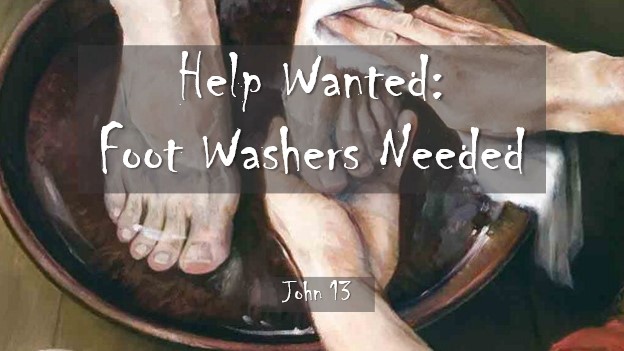
Because we live in a beach community most of us have some experience with washing our feet: When you go to the beach your feet are covered in sand so washing them before you get into your vehicle or enter your home is a good practice. Most other regions of the country people never wash their feet apart from when they take a bath or shower. However, in the ancient near east, foot washing was a part of everyday hygiene and was practiced to prevent the contamination of the living space, especially where people would eat. In John 13 the practice of foot washing takes on a spiritual meaning for the disciples as well as for the church today.

The act of foot washing was usually done by either a servant or the person of the lowest social status among the group. It was an act of service to others. Jesus assumes the role of a servant to His disciples and washes their feet before the last supper. Jesus concluded the foot washing by saying “you should wash one another’s feet.” We will see on Sunday that the clearest application to the spiritual life is that of serving each other in the efforts of personal sanctification. You need other Christians to help you grow in becoming more like Christ, and at the same time they need your help. The point is we need to serve others, but we also need others to serve us. 

I have participated in a few foot washings over my life where someone would wash my feet and then I washed someone else’s feet. Both were a challenge for me. To wash another person’s feet was foreign to me and let’s be honest about feet; they can smell bad. But what I found more difficult was to let another person wash my feet. I was self-conscious and wondered how my feet smell? When it comes to sharing in the sanctification process with other Christians let’s be honest; it can get a little messy. But that is what Christ has called us to do as a community of faith. Are you willing to do the gritty but glorious work of washing another’s feet? Are you willing to humble yourself and let another person come wash your feet? Foot Washers are needed. Join me this Sunday as we dive into John 13 and the practice of spiritual foot washing. 

February 11, 2024

I generally make a long term plan for what I will preach and rarely will I deviate from that plan. Sue came to me a couple of weeks ago and asked me to preach on love for the Sunday before Valentine’s Day, and as you know, I have a hard time saying no to her. My message this Sunday is Love, True Love, from 1 John 4:7-12. 

The apostle John writes a lot on the subject of love and especially so in his epistles. In our text this Sunday he makes a statement about love that reveals the very nature of God: “God is love.” John actually states it twice in the 4th chapter. It’s not that God gives love, or shares love, or is loving. No, God is love, meaning love defines His very nature and His nature defines what love is. We would all agree that showing love is not something only reserved for Christians. I personally know many very loving non Christians and at the same time I know some Christians that are not very loving.  However, to truly love, as God defines love, you have to be on the receiving end of God’s love yourself in order to show love to others. Christ is not only the source of all love but He is the great demonstration of love through His death on a cross, providing the example of how we are to love: with sacrifice and for another’s benefit. The application of that love must be seen in marriage relationships, parent-child relationships, in the Body of Christ and from Christians to the unbelieving world around us. Join me this Sunday for a look at Love, Ture Love.

February 4th, 2024

This Sunday we resume our journey through the Gospel of John, picking things up in Chapter 12:12. This passage is well known because it records the triumphal entry of Jesus on Palm Sunday and marks the beginning of the passion of Christ. The crucifixion of Jesus doesn’t happen until chapter 19 which tells us John devotes a significant portion of his Gospel to the last few days of Jesus’ life.

The nation of Israel was under Roman occupation: they were not free people. One of the common beliefs about the prophesied messiah was that He would deliver Israel from all their oppressors. On a side note – devout Jews today have stopped looking for the messiah as a person to come, rather for the “spirit of the messiah” to come and deliver Israel from their oppressors. This helps explain the tenacity with which Israel is fighting Hamas in Gaza today. The orthodox Jews believe God is on their side. After 70 years of what can only be described as miraculous victories in war, it is hard to reason against their position.

On Palm Sunday Jesus presents himself as the messiah in one of the primary ways he would fulfill that role; as a King. He would come to deliver Israel, as well as Gentiles, from the greatest of oppressors. That oppressor was not Rome, nor is it Hamas, it is none other than Satan himself and the rule of sin over people’s lives. John’s narrative on these events are careful to reveal not only that Jesus is King, but what kind of King he would be and what kind of Kingdom he would lead. Join me this Sunday as we look at King Jesus and His kingdom.